You Won’t Believe What I Ate in the Middle of Nowhere, Wales
Wales is more than castles and misty hills—it’s a hidden kitchen of bold flavors and centuries-old recipes. I stumbled upon villages where locals still make cheese by hand and bake bread in wood-fired ovens. This isn’t tourist food; it’s real, raw, and deeply rooted in tradition. If you’re craving authenticity, let me take you deep into Wales’ unsung culinary soul—where every bite tells a story. Beyond the postcard views and heritage trails lies a quieter, richer experience: one measured in simmering pots, shared tables, and the pride of a culture that has preserved its way of life through food. Here, meals are not performances for visitors but daily acts of identity, resilience, and care.
Why Wales? Uncovering a Forgotten Food Culture
When travelers think of British cuisine, Wales rarely leads the conversation. Overshadowed by London’s global restaurants and Scotland’s famed seafood and whisky, Wales has long been overlooked as a culinary destination. Yet, this very obscurity has become its strength. Isolated by rugged terrain and centuries of cultural preservation, rural Wales has quietly maintained food traditions that have vanished elsewhere. While urban centers adapt to fast trends, Welsh hillside farms and coastal hamlets continue to follow rhythms set by seasons, livestock, and ancestral knowledge. The result is a food culture that is not curated for cameras but lived, day after day, in kitchens without Instagram accounts.
What sets Welsh rural cuisine apart is its resistance to commercialization. In many villages, there are no branded restaurants or fusion concepts—only family-run inns, farm stalls, and home cooks who value flavor over presentation. These are not places that appear on food blogs or receive Michelin stars. They do not need to. Their reputation rests on generations of trust and consistency. A bowl of cawl served at a village hall on a cold Sunday is not just a meal; it is a ritual, a symbol of community endurance, and a declaration of cultural pride.
The contrast between tourist-facing pubs and authentic local kitchens could not be starker. In towns like Betws-y-Coed or Conwy, menus often feature generic ‘Welsh’ dishes—Welsh rarebit, laverbread, and lamb chops—prepared with imported ingredients and reheated convenience. But venture thirty minutes off the A-roads, and you enter a different world. Here, meals are made from what the land provides: lamb that grazed on upland pastures, dairy from grass-fed cows, and herbs gathered from hedgerows. This is not farm-to-table as a trend; it is farm-to-table as necessity, as heritage, as survival.
Off the Map: Finding the Real Flavors Beyond Tourist Trails
To taste the true essence of Welsh food, one must be willing to wander beyond guidebook recommendations. Some of the most memorable meals I’ve had were in places without street names—villages like Tregaron, where the main intersection consists of a post office, a chapel, and a bakery that opens only on Saturdays. Machynlleth, known more for its alternative living communities than its cuisine, hosts a weekly market where elderly farmers sell homemade cheeses wrapped in parchment. And Hay-on-Wye, famous for its bookshops, also harbors tucked-away tea rooms where elderly women serve bara brith cut thick with currants and love.
These experiences rarely come from online searches. They emerge from conversations—overheard at a petrol station, shared in a churchyard, or offered with a nod at a livestock auction. A local might say, “If you’re passing Llanbrynmair Tuesday evening, there’s a supper at the chapel,” and suddenly, you’re invited into a world closed to casual tourists. These gatherings are not staged for visitors; they are part of the fabric of community life. Attendance is expected to be respectful, humble, and grateful. There are no menus, no reservations, and often no prices listed—just a plate placed before you and a quiet, “Go on, have some more.”
Timing is everything. Autumn brings harvest suppers and cider pressing events, while spring means fresh lamb and daffodil festivals with local food stands. Summer sees farmers’ markets in village squares, often organized by women’s institutes or agricultural cooperatives. To experience these moments, one must slow down, stay longer, and resist the urge to check off attractions. The real flavors of Wales reveal themselves only to those who are patient, curious, and willing to accept an invitation without questioning its authenticity.
Taste of Tradition: Iconic Dishes You Won’t Find on Menus
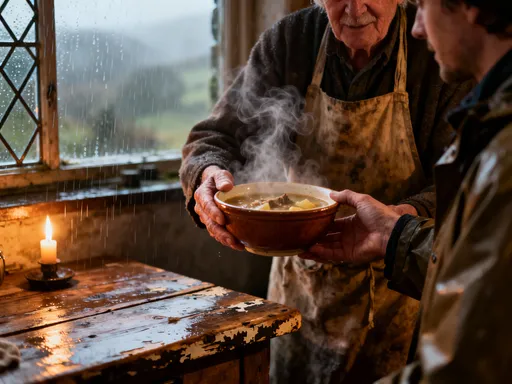
The soul of Welsh cuisine lives in dishes that are rarely seen on commercial menus but remain staples in homes and community halls. Among the most cherished is cawl, a slow-cooked lamb and vegetable stew that varies from household to household. Traditionally made with neck of lamb, leeks, carrots, and potatoes, it simmers for hours until the meat falls apart and the broth becomes rich and golden. Some families add swedes or cabbage depending on the season. The dish is often started on a Sunday and eaten over several days, each reheating deepening the flavor. In winter, a bowl of cawl is more than sustenance—it is warmth, comfort, and continuity.
Then there is bara brith, literally “speckled bread,” a dense, spiced tea loaf made with dried fruit soaked in tea. It is sliced thick, buttered generously, and served with strong Welsh tea. Unlike the dry, mass-produced versions found in supermarkets, homemade bara brith is moist, fragrant, and deeply personal—some add mixed peel, others use only currants, and a few swear by a splash of brandy. It is the kind of bread that grandmothers serve with a knowing look, as if to say, “This is how it’s always been done.”
Welshcakes are another beloved staple, cooked on a griddle and dusted with sugar. Made from flour, butter, eggs, and dried fruit, they are neither cake nor biscuit but a category of their own. Sold at village fetes and school fairs, they are best eaten warm, their surfaces crisp, their centers soft. Then there are ffrwythau’r grug, or bilberries—small, wild berries that grow in upland moors. Sweeter and more intense than blueberries, they are picked in late summer and used in jams, pies, and desserts. Foraging for them is a family tradition, passed from parents to children, often accompanied by stories of old Welsh legends.
From Farm to Table: The Heartbeat of Rural Welsh Kitchens
The geography of Wales shapes its food in profound ways. Mountainous terrain limits large-scale agriculture, but it fosters hardy livestock and a culture of self-reliance. Sheep outnumber people by millions, and lamb is not just a protein source—it is a way of life. Smallholdings dot the hillsides, where farmers raise animals on open pastures, rotating flocks to preserve the land. This low-impact, sustainable approach has been practiced for generations, long before the term “regenerative farming” entered the mainstream.
One of the most remarkable examples of traditional food production is Caerphilly cheese. Once nearly lost to industrialization, this crumbly, moist cheese is now being revived by artisan dairies across the country. Made from unpasteurized milk and drained in cloth, it has a fresh, lactic tang and a texture that softens with age. I visited a small dairy near Brecon where the cheesemaker, a third-generation farmer, still uses wooden vats and hand-ladles the curds. “It’s not about speed,” he said. “It’s about letting the milk speak for itself.”
Beyond dairy, there is a quiet renaissance in Welsh baking. Wood-fired ovens, once common in every village, are being restored in community centers and farmsteads. I watched a baker in Pembrokeshire prepare sourdough using locally milled wheat and natural fermentation. “We’re not inventing anything,” she said. “We’re remembering.” Foragers, too, play a vital role—gathering wild garlic in spring, mushrooms in autumn, and sea vegetables along the coast. These ingredients find their way into soups, sauces, and home preserves, adding layers of flavor that cannot be replicated in a lab.
Hidden Spots: Where Locals Eat (And Tourists Miss)
The most authentic meals in Wales are rarely served in restaurants. Instead, they appear in places with no signage, no websites, and often no formal business license. A community cooperative in Ceredigion sells homemade pies from a converted garage every Friday. A church hall in Powys hosts a monthly supper featuring roast pork, roasted root vegetables, and apple crumble made with orchard fruit. In the shadow of Snowdonia, a farm shop with a handwritten menu serves cider-braised pork shoulder with homemade pickles and warm soda bread—simple, honest, and unforgettable.
One evening, I found myself at a mobile pie van parked beside a country lane near Llanidloes. No queue, no branding—just a woman in a woolen cardigan handing out paper plates. The pie was filled with slow-cooked beef and leeks, encased in a buttery, flaky crust. “Made this morning,” she said. “Only got sixty.” There was no credit card machine, only a cash box with a lock. The customers were farmers, postmen, and retirees—people who knew her by name. I sat on a hay bale and ate in silence, the wind rustling the trees, the scent of woodsmoke in the air. It was not a “food experience” designed for tourists. It was just dinner, and that was exactly what made it special.
These places thrive on trust and tradition. They do not cater to expectations of fine dining. Tables are often mismatched, lighting is functional, and service is unhurried. But the welcome is warm, the accents thick, and the food abundant. There is no pretense, only generosity. To eat here is to be accepted—not as a customer, but as a guest. And in a world of curated travel moments, that kind of authenticity is rare and precious.
How to Eat Like a Local: Practical Tips for Food-Focused Travel
For travelers seeking these experiences, preparation is key. First, rent a car. Public transport in rural Wales is limited, and the best food is often miles from train stations. A vehicle gives you the freedom to explore backroads, stop at farm gates, and respond to last-minute invitations. Second, carry cash. Many small vendors, especially at markets and village halls, do not accept cards. A few pounds in coins can open doors that digital payments cannot.
Timing your visit around seasonal events increases your chances of encountering authentic food culture. Autumn is ideal, with harvest festivals, apple pressing days, and game suppers featuring pheasant and venison. Spring offers lamb festivals and daffodil shows with local produce stands. Summer brings weekly farmers’ markets in towns like Aberystwyth and Llandeilo, where artisans sell honey, preserves, and baked goods. Look for notices in village shops or church bulletins—events like fferm fwyd (Welsh for “food farm”) open days are often advertised locally rather than online.
When engaging with locals, approach with humility. Ask questions, but do not demand explanations. Say “please” and “thank you,” and if you can manage a few words in Welsh—such as diolch (thank you) or shwmae (hello)—you will be met with smiles. Avoid asking, “Is this authentic?” Such a question implies doubt, which can be offensive. Instead, show appreciation through silence, a nod, or a simple, “This is delicious.”
Finally, adjust your expectations. Meals may be served late, portions may be large, and choices may be limited. There may be no wine list, no dietary substitutions, and no air conditioning. But there will be warmth, generosity, and food made with care. These are not inconveniences—they are part of the experience. To eat like a local is to embrace slowness, simplicity, and the quiet joy of sharing.
Beyond the Plate: How Food Connects You to Wales’ Soul
More than any landmark or museum, food offers a direct line to the heart of Welsh culture. I remember sitting at a scrubbed wooden table in a farmhouse kitchen near the Brecon Beacons, surrounded by a family I had met only hours before. We laughed over my mispronunciation of llyfrgell (library), and the grandmother kept refilling my cup with tea, saying, “You’ll get it one day.” The meal—cawl, fresh bread, and a slice of rhubarb crumble—was simple, but the moment was profound. In that kitchen, I was not a visitor. I was, for a short while, part of something enduring.
Food in Wales is an act of connection. It builds trust between strangers, honors the past, and sustains communities through hardship. It reflects a people who have lived close to the land, weathered economic shifts, and preserved their language and customs against the odds. To share a meal in rural Wales is to witness resilience in its most nourishing form. It is to understand that culture is not just in monuments or museums, but in the way a grandmother stirs a pot, the way a farmer cuts cheese, the way a village comes together on a rainy evening to eat and talk and remember.
In a world of fast travel and fleeting experiences, this kind of connection is rare. It cannot be booked or scheduled. It arises from openness, patience, and a willingness to be a guest rather than a guest. When you taste food made by hand, shared without expectation, you are not just eating—you are being welcomed into a story that has been unfolding for centuries.
Wales’ true flavor isn’t found in guidebooks—it’s whispered in village kitchens and passed down through generations. By stepping off the beaten path, you don’t just eat differently; you connect more deeply. Let curiosity lead you, and let your taste buds guide your journey. The real Wales is waiting, one homemade bite at a time.