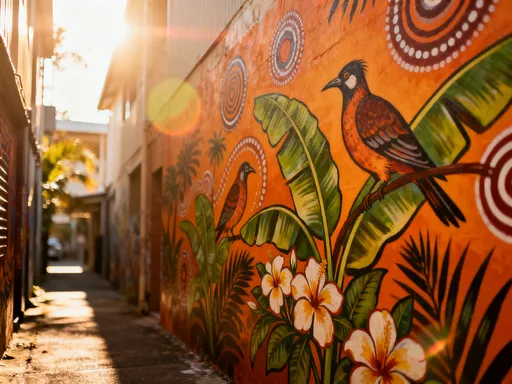
Wandering Through Darwin: Where the Wild North Unfolds Before Your Eyes
You know that feeling when a place just hits different? Darwin did that to me. It’s not just a dot on the map—it’s a living, breathing gateway to the raw beauty of Australia’s Top End. From golden sunsets over the Timor Sea to silent wetlands teeming with life, every moment here feels like a discovery. This is wandering with purpose, where every view tells a story and nature takes center stage. Unlike the bustling coastal cities of the south, Darwin invites you into a slower rhythm, one shaped by tropical tides, ancient landscapes, and skies that ignite each evening in a blaze of color. It’s a destination that rewards patience, curiosity, and an openness to the unexpected.
First Impressions: Stepping into the Soul of the Top End
Arriving in Darwin, you’re immediately embraced by a climate and culture unlike any other in Australia. The air is warm and carries the faint, sweet scent of frangipani blooming along the airport’s walkways. There’s a stillness in the early morning light, broken only by the distant cry of a kookaburra or the rustle of palm fronds in the breeze. As you step into the city, the pace slows instinctively. Darwin doesn’t demand urgency—it invites wandering. With a population of just over 140,000, it’s one of Australia’s smallest capital cities, yet its influence on the surrounding landscape is immense. Nestled between the Timor Sea and the vast wilderness of the Northern Territory, Darwin functions as a portal to some of the most pristine natural environments on the continent.
What sets Darwin apart is not grand monuments or sprawling urban developments, but its seamless integration with nature. The city’s layout is open and uncluttered, with wide streets, green boulevards, and an abundance of public spaces that encourage outdoor living. The coastline is ever-present, shaping both the climate and the culture. Residents and visitors alike spend their days near the water—walking the esplanade, cooling off in lagoons, or watching boats drift across the harbor at dusk. This proximity to the sea creates a rhythm that’s both relaxed and deeply attuned to natural cycles.
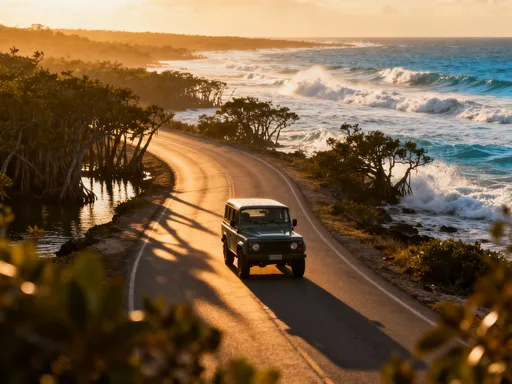
For travelers, the lesson is clear: to experience Darwin fully, you must resist the urge to rush. This is not a city to be seen in a single afternoon. Instead, it reveals itself gradually—through quiet moments at a park bench, a spontaneous conversation with a local, or the slow unfolding of a sunset over the water. The best way to explore is on foot, by bicycle, or with a leisurely drive along the coastal road. Each turn offers a new perspective, a fresh invitation to pause and observe. In Darwin, the journey is not just about where you’re going—it’s about how you choose to see the world around you.
Sunset Rituals: The Magic of Mindil Beach Markets
If there’s one experience that captures the spirit of Darwin, it’s the weekly ritual of the Mindil Beach Sunset Market. Held every Thursday and Sunday during the dry season, from May to October, this gathering transforms a stretch of golden sand into a vibrant celebration of food, culture, and natural beauty. As the sun begins its descent, families, couples, and solo travelers spread out across the beach, claiming spots with towels and low beach chairs. The atmosphere is electric yet peaceful—a blend of anticipation and contentment that only a tropical sunset can inspire.
The sky over the Timor Sea becomes a canvas of shifting colors—amber, rose, violet—each hue deepening as the sun sinks toward the horizon. At the same time, the air fills with the rich aromas of sizzling satay, spiced curries, and grilled seafood. The market features over 150 stalls, offering cuisine from more than 30 countries. You’ll find Thai mango salads, Lebanese lamb wraps, Balinese babi guling, and Australian bush tucker, all prepared fresh on-site. It’s a testament to Darwin’s multicultural identity, shaped by Indigenous communities, Southeast Asian influences, and waves of migration over the decades.
But the Mindil Beach Market is more than just a food event—it’s a sensory ritual. The sound of live music drifts across the dunes, ranging from acoustic guitar to didgeridoo performances. Children chase bubbles, dogs trot along the shoreline, and couples share quiet moments as the last light fades. For many, this is the highlight of their visit, a chance to slow down and connect with the rhythm of the place. To make the most of it, arrive early to secure a good viewing spot, bring a light jacket for the evening breeze, and allow time to explore the craft stalls and art displays. As the stars begin to appear, you’ll understand why locals return week after week—it’s not just about the sunset, but the shared experience of witnessing it together.
Waterfront Wonders: Darwin’s Harbor as a Living Postcard
Darwin’s City Harbor is a masterclass in harmonious urban design. Here, modern infrastructure doesn’t dominate the landscape—it complements it. The waterfront stretches along the edge of the Clarence Strait, offering sweeping views of the sea, mangrove-lined inlets, and distant islands. Clean, paved walkways wind past reflection pools, shaded seating areas, and native gardens, creating a space that’s both inviting and serene. Whether you’re taking an early morning jog, enjoying a midday coffee, or strolling after dinner, the harbor provides a constant connection to the natural world.
One of the most popular features is the Wave Lagoon, a man-made saltwater pool designed to mimic the gentle motion of the ocean. Protected from currents and marine stingers, it’s ideal for families and those who want to swim safely in a tropical setting. The surrounding deck offers sun loungers and shaded cabanas, making it a favorite spot for relaxation. Nearby, Stokes Hill Wharf stands as a historic landmark and a hub of activity. Once a vital port during World War II, it now houses restaurants, cafes, and boutique shops. The wharf’s elevated boardwalk provides one of the best vantage points for watching boats come and go, especially at sunset when the water glows with reflected light.
The harbor’s design emphasizes openness and accessibility. Buildings are low-rise, with wide verandas and natural materials that blend into the surroundings. Rather than blocking the view, they frame it—drawing your eye toward the water and sky. At night, the area transforms with soft lighting, string lights overhead, and the occasional live music performance. The contrast between the city’s modern amenities and its wild, untamed edges is part of what makes Darwin so unique. You’re never far from nature, even in the heart of the urban center. For visitors, the harbor is not just a place to visit—it’s a place to return to, again and again, as a touchstone of calm and beauty.
Into the Wetlands: Birdwatching and Stillness at Fogg Dam
About an hour’s drive east of Darwin lies one of the Northern Territory’s most rewarding natural escapes—Fogg Dam Conservation Reserve. Established in the 1950s as an agricultural project and later repurposed as a wildlife sanctuary, Fogg Dam is now a haven for birdlife and a sanctuary for quiet contemplation. The reserve protects over 12,000 hectares of floodplain, paperbark swamps, and monsoon forest, creating a mosaic of habitats that support an astonishing diversity of species.
The best way to experience Fogg Dam is via its network of elevated boardwalks and observation platforms. As you walk quietly along the wooden path, the sounds of the city fade away, replaced by the rustle of reeds, the splash of a jumping fish, and the calls of unseen birds. The air is thick with the scent of damp earth and eucalyptus. Suddenly, movement catches your eye—a comb-crested jacana, with its bright red crown, steps delicately across a lily pad, its long toes distributing its weight like a natural tightrope walker. Nearby, a flock of magpie geese lifts into the air with a chorus of honks, their black-and-white plumage flashing in the sunlight.
Birdwatchers will find Fogg Dam especially rewarding. Over 200 species have been recorded here, including pygmy geese, rainbow bee-eaters, jabirus, and brolgas. The best viewing times are early morning and late afternoon, when animals are most active and the light is soft. Bring binoculars, a field guide, and a hat for sun protection. But even if you’re not an avid birder, the experience of stillness and observation can be deeply restorative. In a world of constant noise and distraction, Fogg Dam offers a rare opportunity to slow down, listen, and simply be present. It’s a reminder that some of the most powerful travel moments happen not in grand vistas, but in the quiet details of the natural world.
Journey Beyond: Litchfield National Park’s Waterfall Circuit
No visit to Darwin is complete without a day trip to Litchfield National Park, a lush tropical escape just 115 kilometers south of the city. Covering over 1,500 square kilometers, the park is home to cascading waterfalls, crystal-clear swimming holes, and some of the most unusual geological formations in Australia—the magnetic termite mounds. These towering structures, some reaching up to four meters high, are aligned north-south to regulate temperature, a marvel of natural engineering that never fails to fascinate visitors.
The heart of the park’s waterfall circuit is Florence Falls, a double-tiered cascade that plunges into a deep, emerald-green pool surrounded by sandstone cliffs. A well-maintained trail leads to an upper viewing platform, offering a panoramic perspective of the falls and the valley below. For those who want to swim, a steep staircase descends to the base, where the water is cool and refreshing—especially welcome after a hot drive through the savanna. Nearby, Wangi Falls presents a more accessible plunge pool, with a gentle current and shaded picnic areas, making it ideal for families.
Buley Rock Pool, a series of connected waterholes fed by a seasonal stream, offers a gentler swimming experience. The path between these sites is part of the adventure, winding through monsoon forest, past boulders draped in moss, and alongside streams where dragonflies dart in the sunlight. The trails are designed to reveal the scenery gradually, building anticipation with each turn. To make the most of your visit, go during the dry season (May to September), when roads are passable and water levels are safe for swimming. Bring plenty of water, insect repellent, and sturdy footwear. Arrive early to avoid crowds and enjoy the park in relative solitude. Litchfield isn’t just a destination—it’s an immersion in the tropical beauty that defines the Top End.
Cultural Landscapes: Engaging with Aboriginal Rock Art at Ubirr
About three hours east of Darwin, within the vast expanse of Kakadu National Park, lies one of Australia’s most profound cultural sites—Ubirr. This rocky outcrop is home to some of the oldest and best-preserved Aboriginal rock art in the country, with paintings dating back thousands of years. The experience of visiting Ubirr is not just visual—it’s spiritual. As you walk the shaded gallery, guided by signage and, ideally, by a local Indigenous ranger, you begin to understand that this is not a museum exhibit, but a living connection to the world’s oldest continuous culture.
The artwork at Ubirr tells stories of creation, hunting, and daily life. One of the most striking images is the Rainbow Serpent, a central figure in Aboriginal cosmology, depicted in vibrant ochre and white pigments. Nearby, X-ray art reveals the internal organs of animals like barramundi and turtles, showcasing both artistic skill and deep ecological knowledge. These paintings are not static—they’re part of an ongoing cultural tradition, maintained and interpreted by the local Aboriginal communities, particularly the Gagudju and Badmardi peoples.
The viewing platform at the top of Ubirr offers one of the most breathtaking panoramas in northern Australia. From this vantage point, you can see the Nadab floodplain stretching to the horizon, a vast wetland that transforms dramatically with the seasons. During the dry season, it’s a patchwork of grasses and waterholes; in the wet, it becomes an inland sea. The connection between the land and the art is inseparable—what you see in the paintings is reflected in the landscape before you. Visitors are encouraged to observe with respect, to listen to the stories, and to recognize that they are guests on ancestral land. This is not a place to rush through, but to absorb slowly, with humility and wonder.
The Rhythm of the Seasons: How Weather Shapes What You See
To truly understand Darwin, you must understand its seasons. Unlike the four-season cycle of southern Australia, the Top End operates on a binary rhythm: the dry season and the wet season. The dry season, running from May to September, is the most popular time to visit. The humidity is lower, the skies are clear, and the landscape is golden and dry. This is when roads are open, waterfalls are flowing, and wildlife is concentrated around water sources, making it ideal for exploration.
But the wet season, from November to April, has its own dramatic beauty. Known locally as “the build-up,” the months leading up to the monsoon are hot and humid, with afternoon thunderstorms that light up the sky in spectacular electrical displays. When the rains arrive, the landscape transforms almost overnight. Brown plains turn green, rivers swell, and waterfalls roar back to life. While many national parks close due to flooding, this is a time of renewal and abundance. Local residents speak of the wet season with a mix of respect and affection—it’s not a time for tourists, but for those who live here, it’s part of the natural rhythm.
Understanding these cycles enhances your experience as a traveler. It teaches patience, adaptability, and appreciation for the land’s resilience. During the dry season, plan day trips to Kakadu, Litchfield, and Arnhem Land. In the wet, focus on indoor experiences, cultural centers, and coastal walks when storms pass. Always check park alerts and road conditions before heading out. And no matter when you visit, be prepared for the heat—wear lightweight clothing, stay hydrated, and seek shade during the midday sun. Darwin’s climate isn’t a backdrop—it’s a central character in the story of the place.
Conclusion: Wandering as a Way of Seeing
Darwin doesn’t reveal itself all at once. It unfolds slowly, like the opening of a tropical flower at dawn. It asks for nothing less than your full attention, your willingness to pause, and your openness to wonder. From the first breath of warm, frangipani-scented air to the last glow of a Mindil Beach sunset, every moment here invites you to see differently—not just with your eyes, but with your heart. The crocodile gliding through a swamp, the ancient lines of rock art, the sudden silence of a wetland at dusk—these are not just sights to check off a list. They are invitations to connect, to reflect, and to remember what it means to be present.
What makes Darwin extraordinary is not just its landscapes, but the way it changes you. It teaches the value of stillness in a world that rarely offers it. It reminds you that beauty often lies in the unplanned—the unexpected turn, the quiet moment, the shared smile with a stranger watching the same sunset. To wander through Darwin is to embrace a slower, deeper way of traveling. It’s about respecting the land, listening to its stories, and moving through it with care.
So when you come to the Top End, leave the itinerary behind—at least a little. Let the rhythm of the tides, the calls of the birds, and the warmth of the sun guide you. Let yourself be surprised. Because in Darwin, the view isn’t just what’s in front of you. It’s how you choose to see it, how you allow it to change you, and how you carry its quiet magic with you long after you’ve left.